
Planning a Fence Installation Before Winter Hits Central Indiana
Central Indiana's frost line, HOA covenants, and clay soil all affect when and how a fence should go...

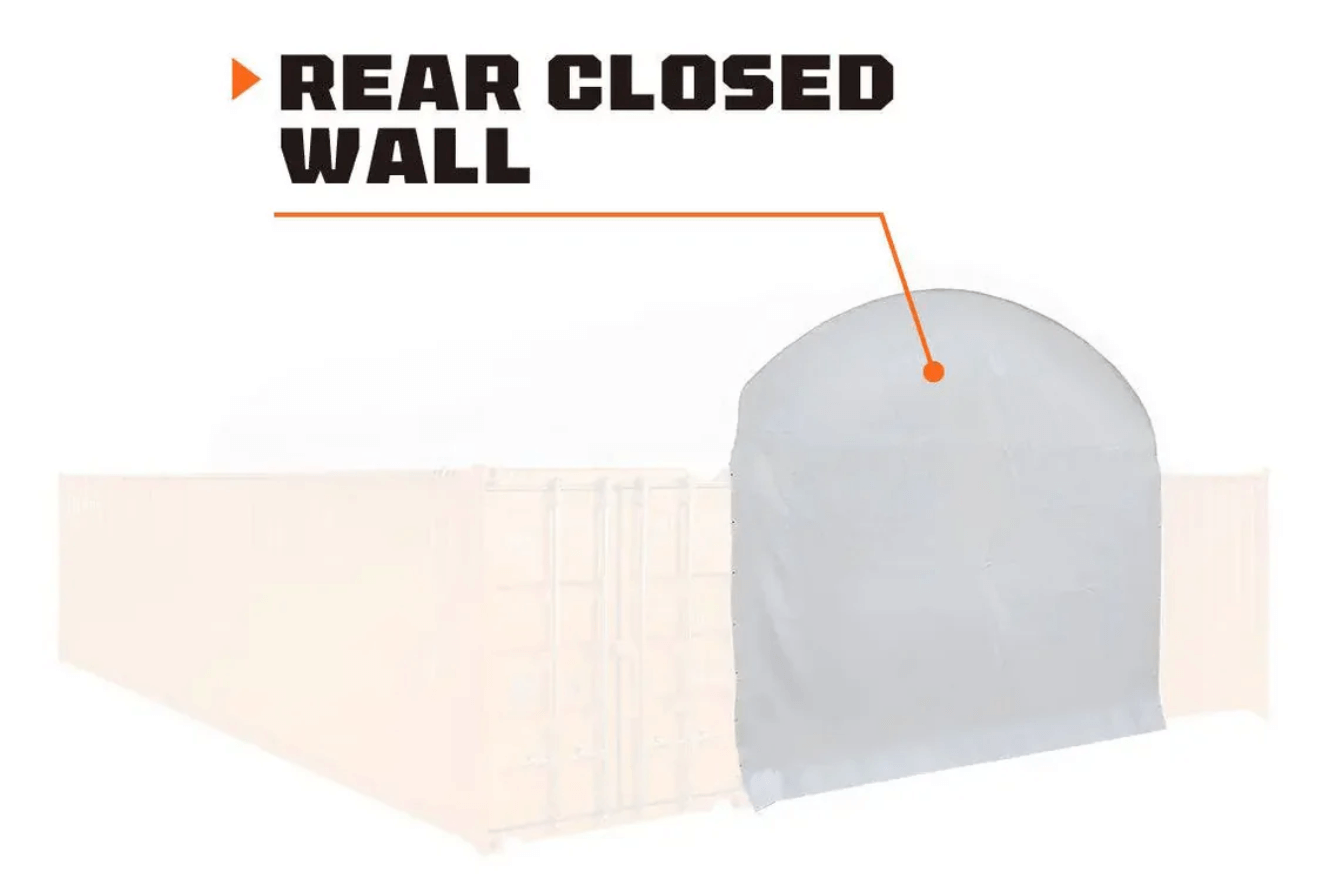
The Back End Wall Kit for TMG-DT2041CV Shelters (9'6") serves as a representative example, designed for compatibility with high-cube container shelters to create a complete enclosure.
In industrial and logistics operations across Canada, adaptable and efficient storage solutions are not merely convenient—they are essential for maintaining operational continuity, protecting valuable assets, and optimizing workflow. Container-based shelters have become a cornerstone of flexible infrastructure, offering rapid deployment and robust protection. This article examines a critical component of these systems: the integrated end wall kit. We will explore its technical specifications, operational benefits, safety implications, and strategic role in comprehensive facility management from the perspective of industry professionals.
The Strategic Role of End Wall Systems in Industrial Operations
An end wall kit transforms an open-ended container shelter from a covered passageway into a fully enclosed, secure, and environmentally controlled space. This conversion is fundamental for numerous applications where protection from elements, security, or climate management is required. For warehouse managers overseeing seasonal inventory, logistics coordinators handling sensitive materials, or procurement specialists tasked with expanding capacity cost-effectively, understanding this component's function is key to making informed infrastructure decisions.
The importance lies in its ability to extend the utility of a base shelter structure. Without an end closure, a shelter is suitable for equipment storage or as a temporary awning. With a properly installed end wall, the same structure becomes a viable space for workshops, secure bulk material storage, maintenance bays, or insulated areas for temperature-sensitive goods. This adaptability directly addresses the dynamic needs of modern industrial sites, where space requirements can fluctuate with project cycles, seasonal demand, or inventory changes.
Technical Overview and Functional Methodology
An end wall kit is a precision-engineered assembly designed to integrate seamlessly with a specific container shelter frame. It typically consists of a rigid frame that matches the shelter's dimensions, durable cladding material, and integrated door and ventilation components. The Back End Wall Kit for TMG-DT2041CV Shelters (9'6") serves as a representative example, designed for compatibility with high-cube container shelters to create a complete enclosure.
Core Technical Components and Assembly Principles
Understanding the kit's construction is crucial for proper specification and installation:
The Triad of Efficiency, Safety, and Productivity
The decision to enclose a container shelter directly impacts three core operational pillars. From an efficiency standpoint, a complete enclosure allows for the organization and protection of tools, materials, and machinery in one designated location, reducing time wasted retrieving items from dispersed or exposed storage. It enables the creation of dedicated process areas (e.g., painting, sandblasting, equipment repair) without the lead time and capital outlay of permanent construction.
Safety is profoundly enhanced. An enclosed space secures contents from theft, vandalism, and unauthorized access. It protects stored materials from wind-blown debris, driving rain, snow load, and excessive sun exposure, which can degrade chemicals, packaging, and equipment. For personnel, it provides a defined, sheltered work environment that can be equipped with proper lighting and climate control, reducing weather-related hazards.
Technical Foundations and Specification Considerations
Selecting the correct end wall kit is a technical exercise that requires matching the component to the primary shelter structure and the intended application. Compatibility is the foremost consideration; a kit designed for one shelter model will not properly fit another due to differences in frame geometry, mounting points, and dimensions.
Critical Technical Evaluation Factors
Performance and Safety Influencing Factors
Several variables determine the long-term performance and safety integrity of an installed end wall. Proper installation is the single most important factor. An incorrectly tensioned fabric wall or a loosely bolted frame will fail prematurely and compromise the entire shelter's stability. Site preparation, including a level and stable base for the container shelter, is foundational.
Intended use drives specific requirements. A storage space for palletized goods may only need a personnel door, while a maintenance workshop requires a large door for vehicle access and robust ventilation provisions. The frequency of door cycling also affects wear and tear on zippers, tracks, and seals.
Safety Considerations and Installation Best Practices
Comprehensive Safety and Operational Protocol
Capabilities, Limitations, and System Integration
However, these systems have inherent limitations. They are not equivalent to the insulation value or security of a permanent masonry or metal building unless specifically ordered with insulated liners and enhanced security features. Their longevity, while substantial, is ultimately less than a permanent structure, with fabric components being the most likely to require eventual replacement. Furthermore, they rely entirely on the structural integrity and correct installation of the primary container shelter; any issues with the base structure will be amplified in the end wall.
Real-World Application in Canadian Logistics and Industry
In a different scenario, a maritime logistics company in British Columbia uses container shelters as temporary field workshops for equipment maintenance on remote port expansion projects. The end wall kits, equipped with personnel doors and ventilation ports, allow them to create secure, organized workshops on-site. This setup protects sensitive diagnostic tools and parts inventory from the humid, salt-laden air, reduces equipment downtime by enabling repairs proximate to the workface, and improves technician working conditions.
Strategic Outlook and Future Trends in Modular Enclosures
Smart integration is another emerging frontier. Kits may increasingly include pre-wired conduits for IoT sensors to monitor internal temperature, humidity, and security status. Designs that facilitate even faster installation and demobilization, perhaps with more modular or pre-assembled components, will appeal to operations with highly transient needs.
In conclusion, the integration of a purpose-designed end wall kit is a strategic decision that elevates the functionality of a container shelter from simple cover to a secure, usable, and efficient industrial space. For Canadian professionals navigating diverse climates and operational challenges, understanding the technical considerations, installation imperatives, and safety protocols associated with these systems is fundamental to building resilient and adaptable logistics and industrial infrastructure.
You must be logged in to post a comment.
Explore our curated selection of various articles in this category

Central Indiana's frost line, HOA covenants, and clay soil all affect when and how a fence should go...