
The Benefits of Deep Cleaning for a Healthier Home
Discover the vital health benefits of deep cleaning your home, including improved indoor air quality...

Careful planning from bottling day backward keeps wineries organized, avoids last-minute stress, and ensures every detail is ready for a smooth, successful bottling.
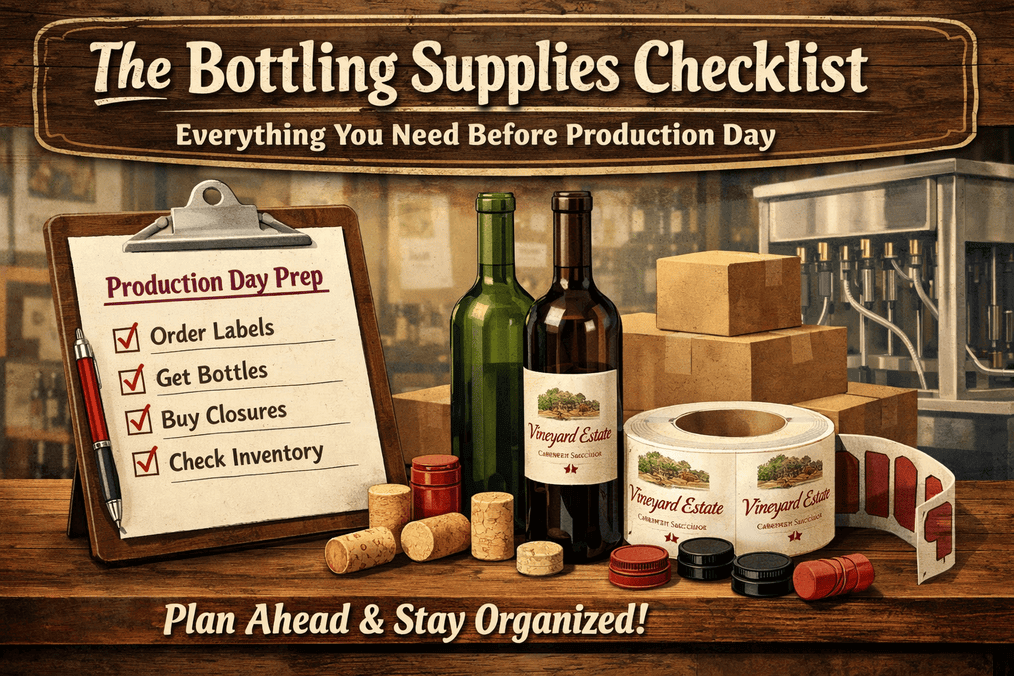
If you're a winemaker, you know there's a certain anxiety that sets in approximately two weeks before your bottling day. The wine is ready. You've scheduled the mobile bottling line. You've carved out time on the calendar. And then someone remembers they forgot to order capsules. Or the labels haven't been picked up yet at the print shop. Or the warehouse is vastly understocked on bottles.
Bottling day is supposed to be a festival, a culmination of months of work in the vineyard and cellar that finally gets transformed into a finished product for consumers. Instead, it's filled with panic because all of the unsexy logistical elements were put off until the last minute. But it doesn't have to be that way.
The reality is that successful bottling occurs well in advance of anyone setting up their equipment. It happens when every last component has been assembled in the proper quantities at the correct time.
When it comes to thinking of what a winery needs for bottling, the bottles themselves seem like the most obvious answer. But this is also where many wineries make mistakes. The first, admittedly simple, error comes with lead time. Shipping of a standard wine bottle takes two weeks but anything custom (embossed logos, crazy colors, odd shapes) can take months, and for small production facilities, this creates a lead-time problem that many don't discover until it's too late.
The second error comes with quantity. As a winery knows it should count on breakage during bottling (old corkers break bottles, for example) and a bit of an overage so that it doesn't run out mid-run, it should be prepared with enough glass otherwise it will either need to stop halfway through its run or switch to different glass that looks terrible for inventory purposes.
Furthermore, glass color is important. Dark green and amber bottles protect wines with aging potential from UV damage while clear provides an aesthetic choice for young wines but presents deterioration with exposure over time. The difference showcases how serious a winery is about quality or not.
This is where things get tricky. Closures come in various materials (natural cork, synthetic corks, screw caps and glass stoppers) and require different equipment settings when it comes to bottling, providing different expectations for sealing quality and relay fundamentally different messages to customers about what's inside.
Natural cork is what consumers expect from premium wines and long-term aging products, meaning a winery needs to find reliable sources with high-quality corks for sale so that natural cork does not run the risk of TCA issues that could spoil entire vintages and send quality-level signals to the wrong brands. Grade matters, grade one has fewer cosmetic defects and consistent density whilst grade three allows everything under the sun.
Over the past decade synthetic corks have gotten a bad rap for being too associated with poor quality wines and their failings (TCA leakage, poorly constructed, etc.) but they're more consistent from an oxygen transfer standpoint and eliminate TCA risk entirely, therefore, it's worth considering these characteristics instead if the wine isn't meant to age.
Screw caps have incredibly consistent seal reliability and arguably the lowest failure rate of any closure option, yet they fall into a camp of much more premium wines than ever before (and, sometimes, varietal- and market-dependent) which either helps or hinders per brand.
It's important to make this decision early and order with plenty of time. Even for cork providers, there are minimum order quantities that don't correlate well with small productions, meaning a winery will need to hoard extra supplies or pay premiums on smaller runs.
Capsules are the items that go over the cork and neck of the bottle, which seems fine until there's no one on staff who's ordered any; even worse: mismatched capsules, PVC and tin together, no one restocking a color as we got towards the end run.
PVC heat-shrink capsules are what most wineries use (super cheap and efficiently applied), while tin capsules are more expensive but look better when applied. Obviously brand positioning has a budget as well, does a $15 bottle look better with PVC? Yes. Does a $50 bottle? Probably not. Custom printed capsules exist but again come with lag time and high minimums ordered, stock capsules in brand-specific approved colors probably out-weigh custom printing for small producers breaking into the market.
No other element gets last minute panic like labeling does. The design took too long. There's a typo in the proof. The color printed differently than what was on screen. The adhesive doesn't stick to the bottle lip treatment. The printer says two more weeks.
What makes labeling even trickier? They require TTB approval before production, which can take months and any changes, from alcohol percentage to appellation location to even font size on mandated warnings, is enough to scrap what you're working with. Smart producers get approval locked in before harvest so there's no chance of holding everything up.
Then there's printing and application. Pressure sensitive labels (stickers) are easy to apply but expensive per unit; cut-and-stack options (glue) are cheaper but require more sophisticated equipment; this matters for mobile bottling crews, too, the compatibility component comes into play here.
Back labels are forgotten often; front labels get all the design consideration but back labels house needed information (legally required) as well as vintage notes, pairings that sell product off shelves which all need to be applied at once if any are going to be applied at all.
Corks need to fit the corker and capsules are not all equal either; some capsules don't shrink under certain heat guns unless adequate attention is paid, and while this should be someone else's detail to worry about it's not, it will cost downtime if the mobile crew shows up and nothing works out.
Sanitizing/cleaning supplies are also needed, bottles show up clean but that's rarely enough, they need rinsing out; hoses fittings need sanitizing between runs or else they won't cross pollinate correctly; running out of Star San at 2pm on bottling day makes everyone miserable.
The last details happen after everything: cases cannot let wine leave in single bottles, cases must be available as well as case dividers if applicable, packing tape, shipping materials for DTC sales need to be stocked as well.
Ultimately, it comes down to working backwards from bottling day; if you have a mobile crew coming in March 15th to bottle, you need to order labels by January, bottles by mid-February and closures even earlier if you're going custom; assuming nothing goes wrong, which it always does, this would keep everyone on track.
Venerable wineries keep spreadsheets floating around (they're not exciting) that keep tabs on each supplier's minimums as well as when to order for certain windows. It's boring, but nowhere near as boring as making bottling stressful because important parts were missed along the way.
Successful wineries who make bottling day look easy are not lucky; they're just obsessively organized about parts that are boring. Every bottle, every cork, every label, every capsule, one by one inventory checked off from a list that's kept in the warehouse ready to go, that's when bottling day is what it should be, the satisfying transformation from all that work in vineyard and cellar into something consumer-facing that people can finally hold in their hands.
You must be logged in to post a comment.
Explore our curated selection of various articles in this category

Discover the vital health benefits of deep cleaning your home, including improved indoor air quality...

Discover the critical role NDIS cleaning services play in promoting health, safety, and well-being f...