How Precision Machining and Swiss Manufacturing Are Shaping the Future of Industrial Production
Precision machining and Swiss manufacturing are no longer niche capabilities, they are foundational...

The rock skeleton bucket is a mature technology that continues to be refined through improved materials and design.
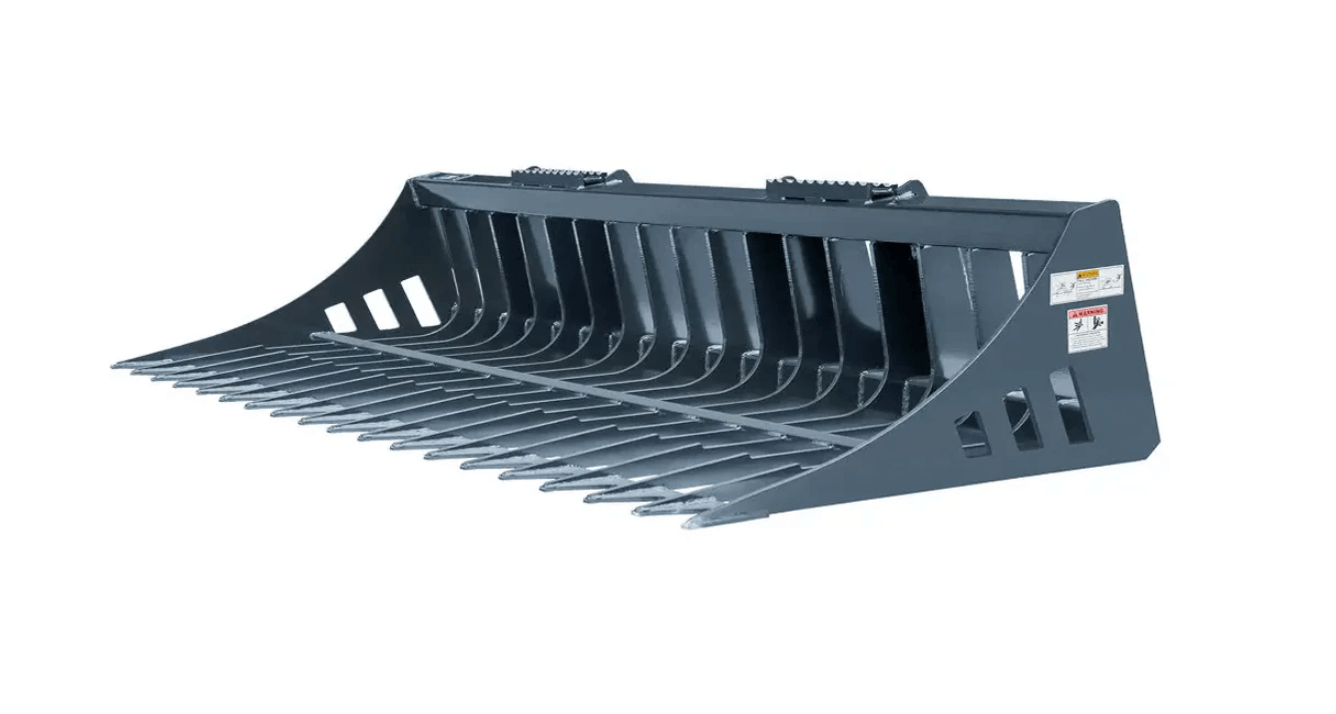
For warehouse managers, logistics coordinators, and industrial equipment operators, efficient material handling is the cornerstone of productive operations. Whether managing bulk aggregates, clearing construction debris, maintaining yards, or sorting recyclable materials, the ability to quickly and effectively separate valuable materials from waste is a constant challenge. Standard buckets excel at moving large volumes but lack the ability to sort or screen materials during the handling process. This is where a specialized attachment, the rock skeleton bucket, transforms a standard skid steer loader into a highly efficient sorting and material management tool. This comprehensive guide explores the technology, applications, safety considerations, and strategic value of integrating a skeleton bucket into your industrial equipment fleet.
In industrial and logistics environments, time and resources spent on secondary material handling directly impact profitability. Consider a scenario where excavated material contains a mix of valuable topsoil and unwanted rocks. Using a standard bucket, the entire mixture is loaded, transported, and dumped, often requiring a separate screening or picking operation. This doubles labor and equipment time. A skeleton bucket performs the separation during the initial load cycle, capturing the valuable fines while leaving the oversize debris behind, or vice versa. This consolidation of tasks translates directly to reduced operational costs, faster project completion, and more efficient use of equipment and personnel. For facility managers overseeing large sites, this capability is not just a convenience—it is a significant factor in site productivity and cost management.
What is a Rock Skeleton Bucket?
A rock skeleton bucket, also known as a screening bucket or rock bucket, is a heavy-duty attachment designed for skid steer loaders and similar compact equipment. Its defining characteristic is its construction: instead of a solid shell, the bucket is formed from a series of parallel, high-strength steel tines or ribs. These tines create openings—typically ranging from 1.5 to 4 inches or more—that allow finer materials like soil, sand, and small gravel to sift through during the scooping and carrying process. Larger objects such as rocks, stumps, concrete chunks, and debris are retained within the bucket. This design effectively combines the functions of a bucket and a screening deck into a single, highly productive implement.
A unit like the 72" Skid Steer Rock Skeleton Bucket Attachment exemplifies this design philosophy. It is constructed from solid carbon steel, ensuring it can withstand the high-impact forces encountered when digging into mixed materials and handling heavy, abrasive loads. It features a universal mounting plate, designed to fit the vast majority of skid steer loaders, allowing for quick attachment changes between this specialized tool and standard buckets or other implements. The bucket's 72-inch working width provides a productive capacity suitable for a wide range of tasks, from landscaping and site cleanup to more demanding industrial applications.
Understanding the specific design elements of a skeleton bucket is key to selecting the right tool for the job and operating it effectively.
The adoption of a skeleton bucket directly enhances the three pillars of operational excellence. Efficiency is improved by combining digging, loading, and screening into one continuous process. This eliminates the need for separate screening equipment or manual picking, dramatically speeding up tasks like site clearing, pipeline backfilling, and aggregate handling. Productivity gains are realized through faster cycle times and the ability to process material in a single pass, allowing a single operator and machine to accomplish what previously required multiple steps or personnel. Safety is enhanced by reducing the need for ground workers to manually sort debris or handle rocks, tasks that carry risks of strains, crush injuries, and other hazards. The operator performs all work from the safety of the enclosed cab, with the machine's structure providing protection.
Matching the Bucket to the Machine and Task
Successful integration of a skeleton bucket begins with proper selection. The three primary technical matches are between the bucket, the skid steer, and the application. First, the skid steer must fall within the recommended horsepower range (45-70 HP for this model) to have adequate power to push the bucket into piles and lift rated loads. Second, the skid steer's rated operating capacity must be sufficient to handle the bucket's weight plus the weight of the material it will carry. Exceeding this capacity compromises stability and safety. Third, the tine spacing must be matched to the material. Four-inch spacing is ideal for applications where the goal is to separate common construction debris from soil. Applications requiring separation of smaller aggregate would necessitate a bucket with narrower spacing.
The Mechanics of Sifting and Material Flow
The sifting action is not passive; it relies on operator technique and bucket design. As the operator curls the bucket upward to scoop material, the tines act as a screen. Finer material falls through the gaps, either back to the ground or into a pile below. The agitation caused by carrying the load and the machine's movement further encourages sifting. The serrated cutting edge helps to break up material clumps during the initial dig, promoting better separation. The bucket's design ensures that the retained material—the rocks and debris—is held securely by the tines for transport to a disposal or stockpile area.
Several variables determine how well a skeleton bucket performs in a given application. Operator skill is paramount. An experienced operator learns how to angle the bucket, control curl speed, and manage load agitation to maximize sifting efficiency while minimizing spillage. Material conditions are critical; wet, sticky clay will clog tine openings and severely reduce sifting effectiveness. The presence of long, fibrous vegetation can also wrap around tines. The size and density of the material relative to tine spacing dictates what is retained. Maintenance, particularly keeping tines free of buildup and inspecting for wear or damage, is essential for consistent performance. The skid steer's own condition, including its hydraulic power and tire traction, also plays a role.
Operating any heavy equipment attachment requires a rigorous focus on safety. The unique design of a skeleton bucket introduces specific considerations.
Essential Safety Protocols for Skeleton Bucket Operation
Equipment, Tools, and Supporting Attachments
The skeleton bucket is the primary tool, but its effectiveness is enhanced by other equipment and accessories:
Strategic Benefits and Operational Upsides
The advantages of a 72" Skid Steer Rock Skeleton Bucket Attachment are numerous. Its primary benefit is the dramatic increase in efficiency for screening and sorting tasks, eliminating the need for separate equipment. The robust, all-steel construction ensures durability in harsh environments. The universal mount provides versatility across different skid steer models. The 72-inch width offers a productive capacity suitable for medium to large-scale jobs. Its weight strikes a balance between providing digging force and remaining manageable for its intended machine class. It transforms a standard skid steer into a multi-functional tool for landscaping, construction, demolition cleanup, recycling, and agricultural tasks.
Inherent Limitations to Consider
This attachment is not a universal solution for all material handling. Its fixed tine spacing limits the size of material it can effectively separate; material smaller than 4 inches will generally pass through. It is not suitable for handling fine, dry materials like sand, which will simply fall through. It is less effective in extremely wet, sticky soils that clog the tine openings. The open design also means it cannot be used to contain or transport loose, fine materials like grain or mulch. Its digging capability, while aided by the serrated edge, is less than that of a heavy-duty digging bucket with a solid cutting edge.
Consider a large-scale land development project. A contractor is clearing a site for a new warehouse. Using a skid steer equipped with a 72" Skid Steer Rock Skeleton Bucket Attachment, the operator can excavate mixed soil and debris. The topsoil and fines fall back to the ground, creating a clean, level base, while rocks, roots, and demolition debris are collected in the bucket and hauled away. This process prepares the site for final grading in a single operation.
In another scenario, a recycling yard receives mixed loads of broken concrete, asphalt, and soil. Using the skeleton bucket, they can quickly separate the soil from the recyclable aggregates. The soil can be used as daily cover, and the clean concrete and asphalt are processed for recycling. This on-site sorting capability adds significant value and reduces waste disposal costs.
A third example involves a municipality maintaining its parks and green spaces. Crews use skid steers with skeleton buckets to clean up after storms, efficiently separating vegetative debris from soil and gravel in walking paths, leaving the paths usable and gathering the debris for composting.
The rock skeleton bucket is a mature technology that continues to be refined through improved materials and design. Future trends include the development of even more wear-resistant steels for tines and cutting edges, increasing service life. We may also see more designs with adjustable tine spacing, offering greater versatility for operators who face varying material conditions. Integration with machine telematics could provide data on bucket usage and wear, aiding in preventative maintenance scheduling.
For procurement specialists, fleet managers, and equipment operators, the decision to integrate a skeleton bucket is a strategic one. It requires a clear understanding of the typical materials handled, the desired outcomes, and the capabilities of the existing skid steer fleet. When selected to match the machine and the application, and when operated with proper training and adherence to safety protocols, this attachment proves to be an invaluable asset. It embodies the principle of doing more with less—consolidating tasks, reducing labor, and increasing the return on investment from a core piece of equipment. By transforming a standard loader into a dynamic sorting and material handling tool, it empowers industrial and logistics operations to work smarter, faster, and safer.
You must be logged in to post a comment.
Explore our curated selection of various articles in this category
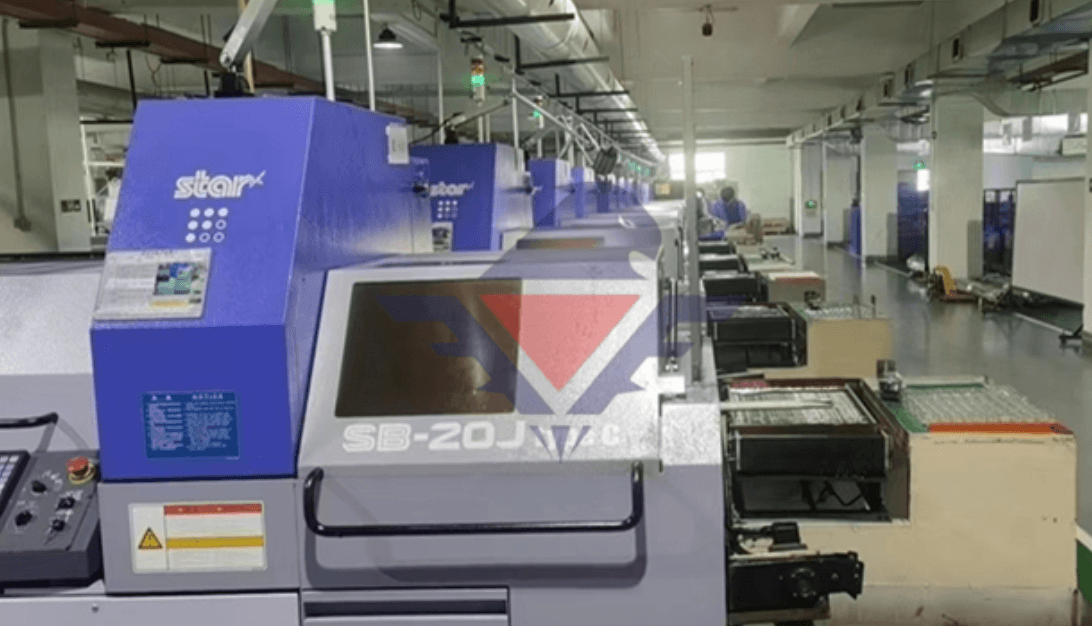
Precision machining and Swiss manufacturing are no longer niche capabilities, they are foundational...
Friction may seem like a minor detail in the vast complexity of factory operations, but its hidden c...