Enhancing Container Shelter Functionality with Integrated End Wall Systems
The Back End Wall Kit for TMG-DT2041CV Shelters (9'6") serves as a representative example, designed...

Central Indiana's frost line, HOA covenants, and clay soil all affect when and how a fence should go in. Here's what homeowners should check before the ground freezes, from footing depth to permits to picking a contractor with real credentials.
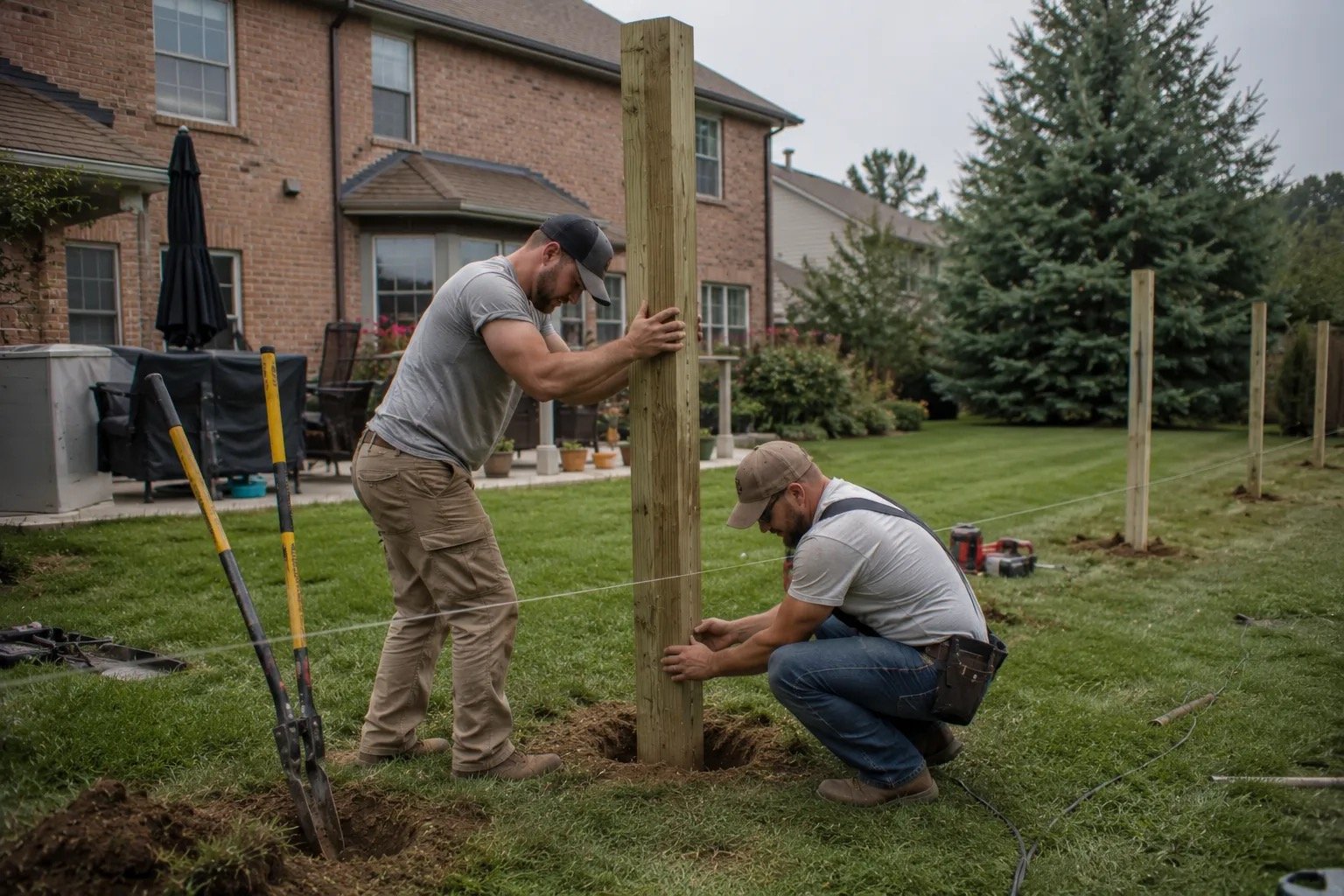
Cooler weather in Central Indiana means shorter daylight, a narrowing installation window, and for anyone planning a new fence, a genuine deadline: once the ground hardens for winter, digging post holes gets a lot harder. Homeowners who wait until the first cold snap to start calling contractors often find their project pushed to spring instead.
Indianapolis-area weather records (1991-2020 normals from the National Weather Service) put the average first frost around October 17, the first freeze around October 26, and the first hard freeze near November 5. Ground doesn't freeze solid the moment air temperature drops below 32°F, but repeated freezing nights soften the working window fast. A fence crew digging post holes in November is fighting harder ground with every week that passes. Getting an estimate scheduled in late summer or early fall, rather than waiting for the first cold morning, is the difference between a fence installed on your timeline and one pushed to spring.
A fence post that isn't set below the frost line will move. When ground freezes, it expands; when it thaws, it contracts, and a post sitting in that active zone gets pushed and pulled every winter until it's visibly leaning. Indiana's residential building code ties minimum footing depth to regional frost depth, which in Central Indiana commonly falls somewhere in the 30 to 36 inch range depending on soil type and site conditions, per the framework set out in the Indiana Residential Code. The exact required depth for a given property is a question for the local building department, not a number to guess at, since it can vary by soil composition and drainage on a specific lot.
Central Indiana also sits on soil that's commonly clay-heavy, and clay is expansive: it swells when wet and shrinks when it dries out, and that movement accelerates through repeated freeze-thaw cycles each winter.
A post set too shallow, or set without enough gravel and concrete around the base, can get pushed upward a fraction of an inch at a time as the clay around it swells. Over several winters that adds up to a visibly tilted line.
Gates carry more stress than a straight fence run, since they're cantilevered off one or two posts. If those posts move even slightly from frost heave, the gate stops swinging true and starts dragging or binding.
Corner and end posts take the most tension from the fence panels pulling on them. A corner post that's heaved even slightly can throw off the alignment of an entire run.
None of this means a fence can't be built to last through Indiana winters. It means the footing depth and concrete work at the start of the job matter more here than they would in a region with sandier, more stable soil.
Indiana's Homeowners Association Act (Indiana Code Title 32, Article 25.5) governs how HOAs formed after mid-2009 handle budgets, meetings, and dispute resolution, but it doesn't itself set fence height or material rules. Those live in each subdivision's own recorded Declaration of Covenants, Conditions and Restrictions, commonly called the CC&Rs, and the specifics vary neighborhood to neighborhood across Hamilton County. Some subdivisions cap fence height, restrict certain materials, or require board approval of a design before installation starts. Pulling the recorded declaration, or simply asking the HOA board directly, before ordering materials avoids a fence that has to come back down.
Cities handle residential fence permitting differently, and rules can include height limits by yard (front versus side versus rear), material restrictions near the street, and setback requirements from the property line. Because these specifics genuinely differ by city and can change, the reliable move is a direct call to the local building department before a single post hole gets dug, not a guess based on what a neighbor's fence looks like.
A fence built even a foot over the property line can turn into a real dispute with a neighbor, and in some cases a city can require it to be moved after the fact. Fence lines are commonly built a few inches to a foot inside the actual property line specifically to avoid any ambiguity about whose side of the boundary the structure sits on. Older subdivisions sometimes have less reliable pin markers, since decades of mowing, landscaping, and previous fence projects can disturb or bury the original survey stakes. When a property's corners aren't confidently known, a licensed surveyor is a small cost compared to rebuilding a fence that turns out to be in the wrong spot. It's also worth calling 811, the national utility-locate line, a few business days ahead of digging. It's a free service, and it's the only way to know for certain where buried gas, electric, or water lines run before a post auger gets anywhere near them.
The work itself follows a fairly consistent sequence regardless of material. The fence line gets staked and string-lined first, so post spacing is even and corners land where they're supposed to. After calling 811, crews wait for the required notice period, commonly a few business days, before digging, so marked utility lines have time to be flagged. Post holes are then dug to the required frost-line depth, with extra depth for larger gate posts that carry more load. Posts go in plumb, typically with a gravel base for drainage and concrete around the shaft, then get braced and left to cure before panels go on. Cure time matters more in cooler fall weather than in summer, since concrete cures through a chemical reaction that slows down as temperatures drop, so a crew working a late-season job may need to plan extra curing days into the schedule rather than rushing panels onto posts that haven't fully set.
Once posts have cured, the fence material gets attached, whether that's individual pickets, pre-manufactured panels, or chain-link fabric. Gates get hung last, after the posts on either side have had time to set, since hanging a gate on a post that's still curing risks throwing off the alignment. A reputable crew finishes by removing excess dirt, old fence material if it was a replacement job, and any packaging or scrap.
A standard residential backyard fence, once materials are on site and posts are being set, commonly takes a few days to complete depending on total linear footage, terrain, and how many gates are involved. Homeowners are often surprised that the digging and setting phase, not the panel installation itself, is usually what takes the most time on a job with difficult soil.
None of these materials solve for bad footing work. The material matters less than whether the posts were set to the right depth in the first place.
A few timing mistakes come up often enough to name directly. Waiting for a firm start date before even requesting quotes costs homeowners options, since contractors booking into October and November fill their schedules early and a property owner who waits until the ground is already hard has less negotiating room. Assuming a neighboring property's fence height or setback confirms what's allowed on a different lot is a common and sometimes costly assumption, especially across HOA sections or after a zoning update. Skipping the 811 call because "there's nothing back there" is another one; buried lines aren't always where a homeowner expects, and irrigation lines in particular are commonly missed by memory alone.
Not every fall fence project is a first-time install. A few warning signs matter more than cosmetic wear when deciding whether an existing fence needs replacing: posts that rock when pushed at the base have likely already lost their bond with the surrounding concrete or soil and will only get worse under another freeze-thaw cycle; rot at the base of wood posts is a structural issue, not a staining issue, and no surface sealant fixes it; panels or pickets separated from the rail usually mean fasteners have pulled loose from wood that's expanded and contracted one too many times; and a gate that's visibly out of square almost always traces back to post movement rather than the hardware itself. A fence showing two or more of these signs is a reasonable candidate for replacement rather than repair.
Homeowners comparing quotes sometimes assume price differences come down to markup, when in practice a handful of site-specific factors drive most of the variation between bids: total linear footage and number of corners, how accessible the work area is for staging material and equipment, soil conditions on the specific lot, whether an old fence needs to be torn out and hauled away first, and how many gates the job includes, since each gate is effectively its own small project. A contractor who walks through these factors during an in-person estimate, rather than quoting a flat per-foot number sight unseen, is generally giving a more accurate number.
Not every company that installs fences carries the same level of training or accountability. The American Fence Association offers a Certified Fence Professional credential, which requires several years of industry experience and passing an exam covering materials, specifications, and installation methods, with recertification required every few years. Homeowners should ask a fence contractor whether they or their crew lead hold that certification, and confirm proof of general liability insurance, before signing anything. A written, in-person estimate is also worth insisting on over a phone quote, since seeing the actual grade and soil on site changes what a fair number looks like.
Does a fence really need to be installed before winter, or can it wait until spring?
It doesn't have to happen before winter, but waiting means a longer lead time. Once the ground hardens, most contractors' schedules shift toward spring backlog, and a job that could have started in October often doesn't start until April or May instead.
Can a fence be installed if the ground is already partially frozen?
It's possible but harder, and it typically costs more since it requires power equipment to break through frozen soil instead of a standard auger. Depth and concrete cure time both become less predictable in cold weather too.
Do all Hamilton County subdivisions have the same HOA fence rules?
No. Fence rules are set at the subdivision level in each community's own recorded covenants, not by a single county-wide standard, so what's allowed in one neighborhood may not be allowed in the one next door.
Is a permit always required for a residential fence in Indiana?
It depends on the city and sometimes the fence height or location on the property. That's a direct question for the local building department rather than something to assume either way.
A fence that's going to hold up through repeated Indiana winters starts with decisions made before the first post ever goes in the ground: the right footing depth for local frost conditions, a confirmed permit and HOA status, and a contractor who can speak to all of it. Getting that groundwork right in the fall avoids finding out the hard way come the first spring thaw.
You must be logged in to post a comment.
Explore our curated selection of various articles in this category
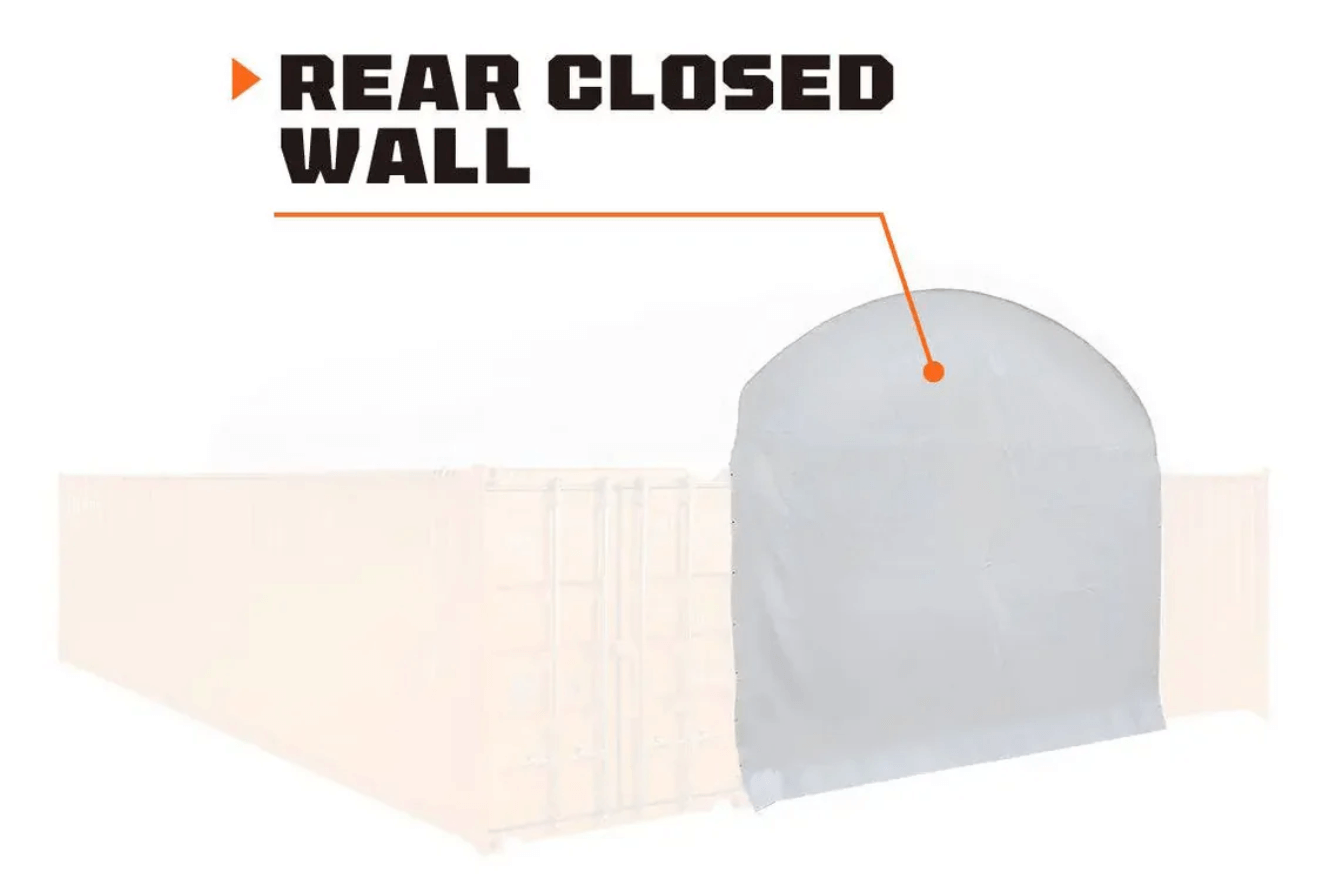
The Back End Wall Kit for TMG-DT2041CV Shelters (9'6") serves as a representative example, designed...