How to Check Your Trees Before Hurricane Season in Central Florida
Learn how to inspect trees before hurricane season, recognize warning signs, avoid harmful pruning p...

Shelby County has already seen two major ice storms in the last few years. Here's what homeowners in Bartlett, TN should check on their trees before winter, from species-specific risk to MLGW's line-clearance rules to when a certified arborist is worth calling.
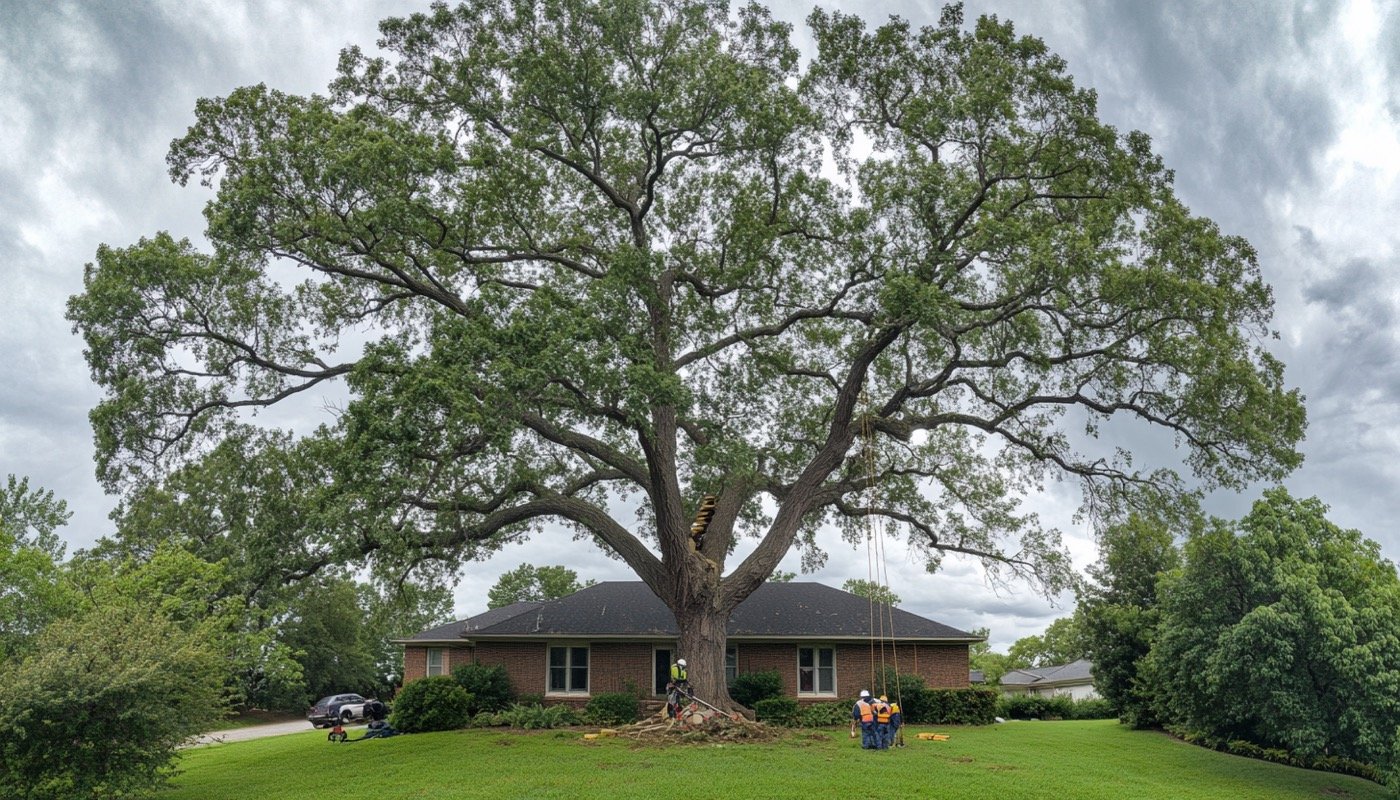
The week before Christmas in 2022, ice coated tree limbs across West Tennessee hard enough to snap them at the trunk, and just eleven months earlier a February storm had already knocked out power to more than 233,000 Memphis Light, Gas and Water customers, about 126,000 of them in Shelby County alone. For homeowners in Bartlett, winter is not a season to think about trees only after a branch lands on the driveway. It is a season with a predictable pattern of frost, freeze, and ice loading, and a little inspection work in October and November pays off in January.
Bartlett sits inside Shelby County, and Shelby County carries two storm reputations at once. Its spring severe weather record is well documented, with 63 recorded tornadoes making it the most tornado-affected county in Tennessee according to National Weather Service climatology data. Less discussed, but just as relevant to a homeowner planning tree care, is the county's winter ice exposure, which has produced two significant multi-day ice events in the past several years.
Much of Bartlett and the surrounding county sits on Memphis silt loam, a soil type known for supporting large, fast-growing trees while giving them relatively shallow, wide-spreading root systems rather than deep taproots. That root structure works fine in normal conditions, but after heavy autumn rain saturates the soil, a mature tree's anchoring can weaken considerably. Add the weight of ice on the canopy and a tree that looked perfectly stable in October can lean or topple in January.
The dominant residential species in Bartlett and Shelby County — sweetgum, southern magnolia, tulip poplar, red maple, and various oak species — each respond to ice loading differently. Sweetgum and tulip poplar tend to have narrow branch angles that split under ice weight, and both grow fast enough that a homeowner can end up with a canopy that has outgrown its structural soundness within a couple of decades. Southern magnolia holds its broad evergreen leaves through winter, which means more surface area for ice to accumulate on compared to a bare deciduous tree; a heavily leafed-out magnolia limb can be carrying several times the ice weight of a bare branch of similar size. Oaks are generally more ice-resistant thanks to denser wood, but a mature oak with existing decay or a co-dominant trunk (two trunks of similar size growing from the same point) is still a structural liability in an ice event. Red maple splits the difference: reasonably strong wood, but shallow surface roots that make it sensitive to the same saturated-soil conditions that affect sweetgum. Near the Wolf River corridor, bald cypress and willow are also common; both tolerate wet soil well but willow in particular is a weak-wooded species prone to limb failure even without ice involved, and an ice load tends to expose that weakness faster than any other species in the area.
The tornado record matters here mainly as a reminder that Shelby County's severe weather calendar has two distinct seasons: a spring tornado risk and a winter ice storm risk. Homeowners who only think about tree safety in April or May are covering half the calendar. The winter half runs roughly January through February, and it has already produced two notable events in recent memory.
Average first frost (36°F) in the Memphis area arrives around November 3, with the average first freeze (32°F) following around November 12, according to National Weather Service Memphis data. That gives homeowners a rough but useful marker: tree inspection and pruning work should ideally wrap up before mid-November, ahead of the window when ice storms have historically hit the region.
Winter Storm Landon struck West Tennessee on February 3, 2022, and became one of the more disruptive weather events in recent Shelby County history. MLGW reported outages affecting more than 233,000 customers total, with roughly 126,000 in Shelby County in the initial wave. Restoring power took until February 14, more than a week, and required bringing in 90 outside line crews and 78 tree-trimming crews from outside the utility's normal workforce. That scale of mutual aid is a strong signal of how much tree-related damage a single ice event can cause across a metro area the size of Memphis and its suburbs.
A second significant ice storm hit West Tennessee from January 31 through February 2, 2023, with forecasters calling for ice accumulation up to a quarter inch or more in the Memphis area. A quarter inch of ice sounds modest until it is multiplied across an entire canopy. Ice that thin adds roughly 500 pounds of extra weight to a mature tree's limbs in some estimates cited by utility and forestry sources, enough to snap already-weak branches and pull down power lines that pass through a yard's tree canopy.
MLGW maintains a tree-trimming program built around keeping vegetation clear of distribution lines. The utility removes trees growing within about 10 to 15 feet of a utility pole when they threaten a line, and it works through the service territory on a rotating cycle of roughly three to five years, moving generally from west to east, from the Mississippi River toward the Fayette County line. That cycle means a given Bartlett neighborhood is not trimmed every year; a tree that was fine at the last MLGW pass could grow into hazard range well before the crew returns.
For a fast-growing species like sweetgum or tulip poplar, three to five years of unchecked growth near a line is a meaningful amount of clearance to lose. A branch that sat six feet from a distribution line at the last trim cycle can easily be brushing that same line two or three growing seasons later, especially in Bartlett's warmer, wetter years. That gap is exactly why the utility's own program is described as a baseline, not a guarantee, and why the reporting channel below matters more than most homeowners assume.
Homeowners who spot a tree limb encroaching on a line do not need to wait for the scheduled cycle. MLGW Customer Care can be reached at (901) 544-6549 to report a hazard tree near a distribution line. This is also the right channel before a homeowner or a hired crew does any pruning work near an active line themselves; MLGW's line-clearance policy, which aligns with the National Electric Safety Code and Shelby County's tree-trimming ordinance, requires the utility to perform an initial inspection before work begins near its lines and a final inspection afterward. Cutting near a live distribution line without going through that process is both a safety risk and, depending on the specifics, a code issue.
When MLGW does have to remove a tree because it endangers a line, the utility's Trade-A-Tree program offers a replacement tree, generally a smaller species better suited to growing near overhead lines long-term. It is worth asking about when a removal is utility-driven rather than homeowner-initiated, since it turns an otherwise unwelcome loss into at least a partial replacement.
Bartlett's own municipal code may layer additional requirements on top of the county-wide tree-trimming ordinance MLGW references, particularly for work in the public right-of-way or near street trees. Homeowners planning any pruning or removal close to a line, a sidewalk, or a shared property boundary should confirm the current rule directly with the City of Bartlett or with MLGW rather than assume one blanket standard covers every situation.
A fall inspection should look for a handful of specific warning signs rather than a general impression of tree health. Look up into the canopy for dead branches, since dead wood holds no flexibility and is often the first thing to fail under ice weight. Look at the trunk for cracks, cavities, or fungal growth near the base, which can indicate internal decay that isn't visible from the outside. Check for co-dominant stems with a tight, V-shaped union rather than a wide, U-shaped one; V-shaped unions include bark that never fully fuses the two stems together and are a common failure point in ice storms. Finally, look at how the tree leans relative to its neighbors and note any new leaning or soil heaving at the base, which can suggest root movement after saturated soil conditions.
Late fall, after leaf drop but before the ground freezes, is generally a good window for structural pruning in this region, since the tree's branch structure is easier to see without foliage and the tree is entering dormancy. Removing dead, crossing, or weakly attached limbs before winter reduces the amount of material an ice load has to act on. Crown thinning, selectively removing some interior branches to reduce density, can also reduce wind and ice resistance on a dense canopy, though it should be done conservatively; a typical structural thinning removes somewhere around 15 to 20 percent of a canopy's interior live branches, and going well beyond that stresses the tree and can actually increase the risk of sunscald and future weak growth.
Timing matters almost as much as technique. Pruning too early in fall, while leaves are still on, makes it harder to see weak unions and dead wood clearly. Waiting until a storm is already forecast leaves no real window for a crew to schedule the work, since demand for tree service spikes sharply in the days right before a known ice event. The realistic planning window in this region runs from shortly after the average first frost in early November through the average first freeze around November 12, which lines up with when the canopy has usually dropped enough leaf cover to work with but the ground hasn't hardened yet.
Not every pruning job requires a credentialed professional, but structural work on a large, mature tree, anything near a power line, or a tree with visible decay is a different category of risk. An ISA Certified Arborist has met a real bar to earn that credential: the International Society of Arboriculture requires at least three years of full-time practical arboriculture experience (or an equivalent combination of experience and education) just to sit for the exam, which is 200 multiple-choice questions requiring a 76% score to pass. Maintaining the credential requires ongoing continuing education and adherence to the ISA Code of Ethics, not a one-time test. Homeowners comparing options for structural pruning or removal work on a large or damaged tree should ask directly whether the crew includes an ISA Certified Arborist, since that credential is a meaningful, verifiable standard rather than a marketing phrase.
After any ice event, the first priority is staying away from anything that could be in contact with a power line. Ice-coated branches can bring a line down without warning as the ice continues to accumulate or as wind adds load, and a downed line can be live even if it looks inert. Homeowners should treat any limb resting on or near a line as energized until MLGW confirms otherwise, and should never attempt to move ice-loaded branches near service lines themselves.
Once it's safe to look more closely, the extent of damage generally determines whether a tree is worth saving. A tree that lost a single major limb but retains a sound trunk and a reasonably balanced canopy often recovers with proper cleanup pruning. A tree with a split trunk, a snapped leader, or loss of more than roughly a third of its canopy is a harder call, and one that benefits from a professional opinion rather than a homeowner's guess, since the tree's long-term structural integrity is difficult to judge from the ground. A split or cracked trunk in particular is often not repairable and can pose an ongoing hazard even if the tree appears to be leafing out normally the following spring.
Species matters in this assessment too. A sweetgum or tulip poplar that lost a major limb along one of its already-narrow branch angles is more likely to have a compromised remaining structure than an oak that shed a single branch from an otherwise sound crown, simply because those first two species tend to fail at their weak points rather than randomly. A magnolia that lost significant canopy in an ice event is also worth watching closely the following growing season, since its evergreen leaf load means the remaining branches are carrying more weight relative to their size than a comparable deciduous tree would.
Before any cleanup begins, photographing the damage from multiple angles, including wide shots showing the tree's position relative to the house, fence, or driveway, gives a homeowner's insurance claim a much stronger starting point. Most homeowner policies cover tree removal when a tree falls on a covered structure, but coverage for a tree that falls without hitting anything varies by policy, so it is worth calling the insurer before assuming either outcome. A tree service company can typically provide a written damage assessment or estimate that doubles as documentation for a claim, which is worth requesting even if the homeowner plans to handle some of the cleanup themselves.
Does MLGW trim every tree near a power line automatically?
Not on a fixed annual schedule. MLGW works through its service territory on a rotating cycle of roughly three to five years, moving generally west to east across the county. A tree can grow into hazard range well before the next scheduled pass, which is why homeowners are encouraged to report a hazard tree directly rather than wait.
Is it legal for a homeowner to prune branches near a power line themselves?
Work near a distribution line has to follow MLGW's line-clearance policy, which is aligned with the National Electric Safety Code and Shelby County's tree-trimming ordinance, and MLGW is required to perform both an initial and a final inspection of that work. Homeowners should contact MLGW before doing any pruning close to an active line rather than assume it is a simple yard task.
Does a thin layer of ice really pose much risk to a mature tree?
Yes. Forecasters called for ice accumulation up to a quarter inch or more in the Memphis area during the January 2023 storm, and even that modest thickness adds substantial extra weight across an entire canopy, enough to snap weak branch unions and bring down already-stressed limbs, particularly on species with narrow branch angles like sweetgum and tulip poplar.
If a tree loses a big limb in an ice storm but is still standing, does it need to come down?
Not necessarily. A tree with a sound trunk and a reasonably balanced remaining canopy often recovers with cleanup pruning. The harder cases are a split or cracked trunk, a snapped main leader, or loss of a large share of the canopy, all of which are worth a professional assessment rather than a guess, since structural integrity below the bark isn't visible from the ground.
Winter in Bartlett follows a fairly predictable shape: a frost and freeze window that arrives in early to mid-November, followed by a real possibility of an ice event sometime in late January or February, as both 2022 and 2023 demonstrated. Trees that go into that window with dead wood removed, weak unions identified, and any line-adjacent hazards already reported to MLGW are simply less likely to become an emergency. A little inspection time in the fall is a much smaller project than dealing with a split oak over a driveway in February.
You must be logged in to post a comment.
Explore our curated selection of various articles in this category
Learn how to inspect trees before hurricane season, recognize warning signs, avoid harmful pruning p...